Oracle Users List

The Role of Oracle Customers List in Expanding Global B2B Outreach

In the fast-changing world of digital marketing, data is the cornerstone of building strong connections with potential buyers. For B2B marketers, targeting enterprises that rely on robust platforms like Oracle applications offers an immense opportunity. This is where an Oracle customers list becomes a strategic enabler. A well-curated list doesn’t just help marketers identify prospects; it forms the backbone of personalized campaigns, boosts global outreach, and accelerates sales funnels.

In this blog, we explore why an Oracle customers list is vital for expanding global B2B outreach and how data marketers can harness it to establish meaningful client relationships.

Understanding the Oracle Ecosystem

Oracle is one of the world’s leading providers of enterprise IT solutions, offering products ranging from ERP (Enterprise Resource Planning) to cloud infrastructure, customer experience software, databases, and supply chain management systems. These applications serve industries across finance, manufacturing, healthcare, retail, and technology.

Because of Oracle’s wide adoption, businesses relying on its technology often fall in the category of large enterprises and mid-market companies with significant budgets for digital transformation. Engaging with this audience requires precision targeting, which is only possible with an intelligently compiled Oracle customers list.

Why Oracle Customers List Matters for B2B Outreach

For data marketers, such a list is not just a spreadsheet but a strategic intelligence tool. It provides deep insights into companies using Oracle’s technology stack, their geographical locations, business verticals, and decision-makers. By leveraging this data, marketers can:

  • Expand Global Footprint: Target companies worldwide that are aligned with Oracle technology.
  • Enhance Personalization: Tailor campaigns to specific industries or Oracle modules (e.g., Oracle HCM Cloud, NetSuite ERP).
  • Accelerate Lead Generation: Reach high-value prospects that already prioritize IT innovation.
  • Support Account-Based Marketing (ABM): Focus efforts on accounts with maximum ROI potential.

For organizations offering SaaS solutions, IT consulting, cloud migration services, or complementary software tools, an Oracle customers list ensures campaigns reach the right decision-makers at the right time.

Key Benefits of Using an Oracle Customers List

1. Precision Targeting for Global Campaigns

Data marketers often face the challenge of scattering resources across audiences with low conversion potential. By centralizing efforts on verified Oracle user companies, outreach becomes sharper and resource-efficient. Instead of broadcasting to everyone, marketers interact with pre-qualified companies more likely to engage.

2. Supporting Cross-Border Expansion

Breaking into new geographies is a critical growth driver for B2B firms. With an Oracle customers list segmented by location, marketers can identify enterprises across North America, Europe, APAC, Middle East, and Africa. This simplifies localization strategies since outreach can be tailored with regional insights.

3. Multi-Dimensional Segmentation

Oracle users list data can typically be segmented by:

  • Company size and revenue
  • Industry vertical
  • Technology adoption stage
  • Geographic location
  • Key decision-makers (CTOs, CIOs, IT Directors, Procurement Heads)

This segmentation allows for hyper-personalized campaigns, offering specific value propositions rather than generic pitches.

4. Maximizing Account-Based Marketing Outcomes

ABM thrives on accurate data. By matching services or solutions to the exact Oracle applications used by companies, marketers can craft personalized journeys for top-tier accounts. For example, a cloud migration firm can target only Oracle E-Business Suite customers looking to adopt cloud-native infrastructure.

5. Shortened Sales Cycles

Since prospects on the list are pre-identified Oracle users, marketing conversations start with a deeper level of relevance. Less time is spent “qualifying” leads, and more time is invested in positioning value. This results in faster decision-making and shorter conversion timelines.

Strategic Applications for Data Marketers

An Oracle customers list holds immense versatility for outreach strategies. Here’s how data marketers can leverage it for maximum impact:

Email and Content Marketing

  • Personalized Campaigns: Develop Oracle-specific solution guides, white papers, and webinars.
  • Lifecycle Nurturing: Send follow-up content based on Oracle product updates or industry pain points. For instance, target Oracle NetSuite customers with case studies highlighting accounting automation.

Event Marketing and Webinars

Inviting Oracle customers to tailored industry events and webinars accelerates engagement. Events focused on topics like “Optimizing Cloud ROI for Oracle ERP” are more likely to resonate with Oracle-reliant enterprises than generic IT webinars.

Social Media Targeting

Using advanced filters on platforms like LinkedIn, an Oracle customers list can help direct ad campaigns to decision-makers in Oracle-using companies, ensuring higher-quality engagement.

Collaboration and Partnerships

Some Oracle customers are open to strategic vendor partnerships. A curated customer list helps marketers identify such opportunities and initiate conversations that go beyond simple selling.

Market Intelligence and Competitor Benchmarking

Analyzing clusters of Oracle users reveals industry adoption trends. Data marketers can use this intelligence to position their services competitively, identifying gaps in vendor support or complementary solution areas.

Expanding B2B Outreach Globally with Oracle Customers List

When data marketers focus on global expansion, they face unique challenges: cultural nuances, regulatory requirements, and competitive landscapes. An Oracle customers list provides the structure needed to overcome such barriers by creating informed entry points into foreign markets.

  • Localized Campaigns: Marketers can adapt messaging for Oracle users in Japan differently from those in Western Europe to respect cultural and business practice differences.
  • Compliance-Oriented Outreach: A verified customers list ensures GDPR-compliant targeting in Europe or CCPA adherence in California.
  • Scaling Technology Narratives: Oracle’s dominance provides marketers with a “common ground” to build messaging across borders. For example, offering Oracle ERP optimization services appeals universally, though the execution may be locally nuanced.

Best Practices for Leveraging an Oracle Customers List

Data is only valuable when it’s accurate, actionable, and strategically applied. To maximize effectiveness, marketers should:

  • Choose Reputable Data Providers: Ensure lists are sourced from verified channels with frequent updates.
  • Maintain Data Hygiene: Regularly cleanse outdated contacts and remove bounced emails.
  • Integrate with CRM Tools: Sync the Oracle customer dataset with platforms like Salesforce or HubSpot for seamless campaign execution.
  • Segment Rigorously: Avoid one-size-fits-all messaging. Instead, tailor campaigns for Oracle ERP, CX Cloud, EPM, or NetSuite users individually.
  • Combine with Predictive Analytics: Use AI-driven tools to forecast purchase intent within Oracle-using accounts and time outreach effectively.

Real-World Example

Consider a cybersecurity vendor targeting enterprises using Oracle Cloud Infrastructure. By leveraging an Oracle customers list:

  • They identify global companies transitioning workloads from on-premise to Oracle Cloud.
  • They segment prospects by region to launch GDPR-compliant campaigns in Europe.
  • They design webinars showcasing “Cybersecurity Best Practices for Oracle Cloud Workloads.”
  • The result: highly relevant engagement, increased response rates, and shortened deal closures.

This example reflects how marketers can transition from a broad spray-and-pray model to a focused and ROI-driven outreach strategy.

Conclusion

In today’s data-driven B2B environment, expanding global outreach requires not just ambition but also precision. An Oracle customers list bridges the gap between intent and execution by empowering data marketers with accurate, segmented, and actionable intelligence. Whether the goal is entering new markets, boosting ABM strategies, or nurturing global partnerships, this rich dataset becomes a growth catalyst.

For Data Marketers aiming to target enterprises that embrace Oracle’s technology ecosystem, investing in a high-quality Oracle customers list is not optional—it is essential. By aligning campaigns with the pain points, compliance requirements, and priorities of Oracle user companies, marketers not only amplify outreach globally but also build long-term, trust-based relationships in the process.

How to Build Targeted Campaigns with a Verified Oracle Customers List

In today’s hyper-competitive B2B landscape, success often depends on how well you identify and connect with the right audience. For companies selling software solutions, IT services, or enterprise integrations, nothing is more valuable than a verified list of Oracle customers. Oracle, as one of the global leaders in cloud applications, databases, ERP, and enterprise solutions, powers thousands of organizations across industries. By targeting these verified Oracle customers, businesses can cut through the noise, generate highly relevant leads, and run campaigns that directly address the prospects’ pain points.

This blog explores how to build effective, targeted campaigns using a verified Oracle customers list, steps to optimize targeting, and strategies to maximize ROI.

Why a Verified Oracle Customers List Matters

A verified Oracle customers list eliminates the guesswork from B2B marketing. Instead of casting a wide net, you know exactly who your potential customers are—businesses already invested in Oracle technologies.

  • Accuracy and relevance: Verified data ensures campaigns reach IT decision-makers, CIOs, CTOs, procurement heads, or Oracle administrators.
  • Shortened sales cycles: You engage prospects based on the technology they already use, instead of persuading them on fundamentals first.
  • Cost efficiency: Every email, call, or ad impression is directed towards qualified companies already aligned with your solution stack.
  • Personalized messaging: With insights into Oracle products they use, your campaigns can highlight compatibility, system upgrades, or integration capabilities.

Ultimately, a quality Oracle customers list forms the foundation for highly targeted marketing strategies that save time and maximize conversions.

Steps to Build Targeted Campaigns with an Oracle Customers List

1. Define Your Campaign Objectives

Start with clarity. Are you aiming to sell Oracle-compatible software, offer managed IT services, or provide consulting for cloud migrations? Your objectives will determine how you segment and craft messages for your Oracle customer audience.

For example:

  • If you sell integration tools, you may target companies using Oracle ERP.
  • If you offer cloud migration services, focus on Oracle on-premise customers transitioning to the cloud.

2. Segment the Oracle Customers List

Not all Oracle users are the same. Segmentation helps you identify niche groups for precision-driven campaigns. Break the list down by:

  • Industry (finance, healthcare, telecom, manufacturing)
  • Company size (SMBs vs Fortune 500 enterprises)
  • Geographic location (regional differences may impact buying behavior)
  • Technology adoption stage (on-premises vs Oracle Cloud)
  • Job titles (IT heads, operations, procurement managers)

Segmentation empowers you to match your product or service more closely with the prospect’s specific challenges and opportunities.

3. Craft Personalized Messages

Generic outreach rarely works in enterprise marketing. Build messaging that resonates with Oracle customers by:

  • Highlighting integration benefits (e.g., “Seamless API integration with Oracle ERP systems”)
  • Framing the cost savings (e.g., “Reduce 20% of operational overhead with Oracle-compatible automation”)
  • Focusing on pain points (e.g., “Struggling with Oracle database performance? Discover our optimization tools.”)

When prospects see that you understand their Oracle ecosystem and challenges, they are far more likely to engage.

4. Choose Multichannel Engagement

Don’t rely on a single platform. Engage Oracle customers through a mix of personalized emails, professional LinkedIn outreach, and retargeted display ads.

  • Email campaigns: Deliver industry-specific offers or whitepapers tied to Oracle solutions.
  • LinkedIn Ads: Target Oracle professionals by job title, industry, and company size.
  • Content marketing: Publish case studies, blogs, and webinars tailored to Oracle adoption trends.
  • Events and webinars: Host sessions that highlight Oracle compatibility and integration use cases.

A well-strategized combination ensures maximum reach and multiple touchpoints with prospects.

5. Leverage Data Enrichment

A verified Oracle customers list is powerful, but enhanced data can make your campaigns unstoppable. Adding firmographic (company revenue, employee size), technographic (other tools in use), and behavioral insights drives greater relevance. Data enrichment enables hyper-personalized pitches like:

“Since your organization uses both Oracle ERP and Salesforce, our middleware tool integrates seamlessly to boost cross-platform efficiency.”

6. Monitor and Optimize Campaigns

Even with a verified Oracle list, not every message will perform equally. Track campaign KPIs such as:

  • Open and response rates for emails
  • Click-throughs on LinkedIn or Google Ads
  • Conversion rates on landing pages
  • Event sign-ups and attendance

Test different subject lines, CTAs, and segmentation angles to refine performance continuously. A/B testing helps identify what resonates most with Oracle users.

Best Practices for Oracle Customer Targeting

  • Keep messaging solution-oriented: Focus on solving Oracle-related challenges, not just selling.
  • Avoid overloading prospects with technical jargon: Speak in terms of business value (efficiency, ROI, security).
  • Respect compliance: Ensure outreach aligns with GDPR, CAN-SPAM, and regional data privacy laws.
  • Invest in verified data providers: Outdated, unverified, or scraped lists waste resources and damage brand credibility.

The ROI of Targeted Campaigns

When built strategically, campaigns targeting verified Oracle customers yield higher ROI compared to generic B2B outreach. Personalized communication ensures:

  • Better engagement rates due to industry and technology relevance
  • Shorter decision-making timelines since Oracle adoption is already in place
  • Higher close rates because solutions are aligned with an existing ecosystem
  • Reduced customer acquisition costs by avoiding broad, irrelevant campaigns

Verified Oracle lists essentially act as a shortcut to warm leads—companies with a technical foundation in Oracle and potential need for complementary solutions.

Conclusion

Targeting the right audience is half the battle in B2B sales. A verified Oracle customers list equips you with the precision to engage decision-makers, deliver personalized campaigns, and maximize your marketing ROI. By combining accurate data, segmentation, value-led messaging, and multichannel strategies, businesses can build campaigns that resonate deeply with Oracle users.

For companies offering Oracle-compatible solutions or professional services, adopting this approach transforms your marketing from generalized outreach to laser-focused engagement, ensuring every touchpoint counts toward conversion and growth.

How Accessing a Verified Workday Customers List Can Boost Your B2B Sales

In today’s competitive B2B marketplace, targeting the right audience is more important than ever. If your company sells enterprise software, IT services, HR solutions, or consulting services, then connecting with organizations already using Workday can be a game-changer. A verified Workday customers list allows sales teams and marketers to fast-track outreach, reduce wasted efforts, and significantly improve ROI.

This article explores how a verified Workday customers database can accelerate sales growth, what makes it valuable, and the best practices for leveraging such lists to close more deals.

Why Target Workday Customers?

Workday is one of the fastest-growing cloud-based enterprise applications, widely used for Human Capital Management (HCM), Financial Management, and Enterprise Planning. Companies that use Workday are forward-looking, digitally mature, and often have significant IT budgets.

Targeting Workday users offers several advantages:

  • They are already comfortable investing in enterprise-grade SaaS solutions.
  • They often require complementary tools, integrations, and consulting services.
  • Their industries span finance, healthcare, education, and technology—sectors with strong IT buying cycles.
  • They represent high-value customer segments with long-term revenue potential.

For B2B vendors, having direct access to these organizations—via a verified Workday customers list—means unlocking decision-makers and creating the right conversations faster.

What Is a Verified Workday Customers List?

A Workday customers list is a curated database of companies and professionals currently using Workday applications. A verified list goes a step further—it is validated, updated, and filtered to ensure accuracy, reducing email bounces and irrelevant contacts.

These lists typically include:

  • Company Name and Industry
  • Corporate Headquarters and Locations
  • Workday Applications in Use (HCM, Payroll, Finance, etc.)
  • Technology Stack Information
  • Key Contacts: C-level executives, IT directors, HR heads, procurement managers
  • Verified Email Addresses and Direct Phone Numbers

Such a verified dataset ensures your B2B sales campaigns target real buyers with active technology needs.

How a Verified Workday Customers List Boosts B2B Sales

Accessing a verified Workday database directly impacts sales efficiency and pipeline growth. Here’s how it can boost your results:

1. Precision Targeting of Decision-Makers

Instead of cold prospecting, sales teams can directly approach Workday users who have the budget and business need for complementary solutions. Verified lists provide decision-maker details, such as CHROs, CIOs, CFOs, and IT procurement managers, ensuring you reach the right stakeholders.

2. Shortened Sales Cycles

B2B sales cycles are often long because marketers spend time identifying qualified accounts. With a Workday customers list, lead qualification is pre-done. You already know the software environment, so your pitch is more relevant.

Example: If you offer data migration tools or payroll integration services, showcasing compatibility with Workday immediately resonates with prospects.

3. Increased Conversion Rates

By targeting the right audience with the right solution, conversion rates naturally improve. Campaigns stop reaching irrelevant companies and instead focus on businesses with real requirements.

4. Multi-Channel Outreach Opportunities

A verified database provides emails, phone numbers, and LinkedIn profiles, which empowers SDRs and marketers to connect across multiple channels. Coordinated outreach leads to higher response rates and greater appointment setting success.

5. Stronger ABM (Account-Based Marketing) Strategies

Account-based marketing thrives on personalization. When you know that a company is a Workday user, you can:

  • Personalize your pitch around integration benefits.
  • Share client success stories from similar Workday customers.
  • Target key accounts with email, ads, and LinkedIn campaigns simultaneously.

A verified list supplies the granular information needed for effective ABM campaigns.

Use Cases of Workday Customer Lists

Different industries and B2B vendors can leverage Workday users lists in unique ways:

  • IT Services & Consulting Firms – Offer Workday implementation, support, and system integration.
  • Software Vendors – Sell complementary applications like HR analytics, payroll automation, or ERP add-ons.
  • Recruitment & Staffing Agencies – Target firms using Workday Recruiting modules to offer specialized staffing solutions.
  • Financial Technology Providers – Assist Workday clients in enhancing financial reporting, compliance, or ERP efficiency.
  • Training & Development Companies – Upsell employee training services to enterprises focused on workforce development.

By tailoring outreach to these use cases, B2B companies sharpen their competitive edge.

Best Practices for Using a Verified Workday Customers List

To maximize the impact, follow these proven strategies:

  • Verify Data Regularly: Even a verified list needs periodic updates to maintain accuracy. Partner with providers who refresh data frequently.
  • Segment by Industry & Company Size: Create segmented outreach campaigns to address unique industry challenges.
  • Personalize Campaigns: Avoid generic pitches. Reference Workday adoption in your messaging to demonstrate relevance.
  • Use Multi-Channel Marketing: Combine email, LinkedIn, webinars, and cold calling for better engagement.
  • Track & Analyze Performance: Measure open rates, response rates, and conversions. Use insights to refine further campaigns.

Final Thoughts

Accessing a verified Workday customers list is one of the most effective strategies for B2B businesses targeting enterprise buyers. It takes the guesswork out of prospecting, delivers high-quality leads, and strengthens both outbound sales and account-based marketing.

By reaching Workday decision-makers directly, companies can shorten sales cycles, drive higher ROI, and stay ahead of competitors still stuck in untargeted outreach. Whether you sell IT services, consulting, HR solutions, or enterprise software, a well-validated Workday database is an indispensable tool for scaling revenue.

ServiceNow

How Fortune 500 Companies Use ServiceNow to Streamline IT & Business Operations

In today’s rapidly evolving digital landscape, Fortune 500 companies are increasingly turning to ServiceNow to transform their IT service management and business operations. This comprehensive platform has become the backbone of enterprise digital transformation, enabling organizations to automate workflows, enhance productivity, and deliver exceptional user experiences.

What is ServiceNow and Why Do Enterprise Leaders Choose It?

ServiceNow is a cloud-based platform that automates IT service management (ITSM) and extends into IT operations management, security operations, and business process automation. Fortune 500 companies choose ServiceNow because it provides a single system of record that breaks down organizational silos and creates seamless workflows across departments.

The platform’s appeal lies in its ability to digitize and automate manual processes, reducing operational costs while improving service delivery speed and quality. For large enterprises managing thousands of employees and complex IT infrastructures, ServiceNow offers the scalability and reliability needed to support mission-critical operations.

Key Ways Fortune 500 Companies Leverage ServiceNow

IT Service Management Excellence

Fortune 500 companies use ServiceNow‘s ITSM capabilities to centralize incident management, problem resolution, and change management processes. Companies like General Electric and Coca-Cola have implemented ServiceNow to create unified IT service desks that handle thousands of tickets daily with improved resolution times and user satisfaction scores.

The platform’s AI-powered Virtual Agent helps automate routine IT requests, allowing IT teams to focus on strategic initiatives rather than repetitive tasks. This automation typically reduces ticket volumes by 20-30% while improving first-call resolution rates.

Business Process Automation

Beyond IT, Fortune 500 companies extend ServiceNow into human resources, facilities management, and customer service operations. Organizations use the platform’s workflow automation capabilities to streamline employee onboarding, equipment provisioning, and compliance processes.

For example, major financial institutions use ServiceNow to automate regulatory compliance workflows, ensuring consistent adherence to industry standards while reducing manual oversight requirements. This approach significantly reduces compliance risks and operational overhead.

Digital Transformation Acceleration

ServiceNow serves as a digital transformation catalyst for Fortune 500 companies by providing low-code/no-code development capabilities. Business users can create custom applications and workflows without extensive technical expertise, accelerating innovation cycles and reducing IT backlogs.

Companies in the manufacturing and retail sectors particularly benefit from ServiceNow’s ability to integrate with existing enterprise systems, creating unified digital experiences that span multiple business functions.

Measurable Benefits Fortune 500 Companies Achieve

Operational Efficiency Gains

Fortune 500 companies typically report 25-40% improvements in operational efficiency after ServiceNow implementation. These gains come from automated workflows, reduced manual interventions, and streamlined approval processes that eliminate bottlenecks.

Major telecommunications companies have used ServiceNow to reduce service provisioning times from weeks to days, directly impacting customer satisfaction and revenue generation capabilities.

Cost Reduction and ROI

Enterprise organizations consistently achieve significant cost savings through ServiceNow implementations. By consolidating multiple point solutions into a single platform, companies reduce software licensing costs, integration complexity, and maintenance overhead.

Fortune 500 companies often see ROI within 12-18 months, with ongoing operational savings continuing to accumulate over time. These savings typically range from $2-5 million annually for large enterprises.

Enhanced Employee Experience

ServiceNow’s employee self-service portals dramatically improve workplace productivity by enabling staff to resolve common issues independently. Fortune 500 companies report 40-60% reductions in help desk call volumes after implementing comprehensive self-service capabilities.

Implementation Best Practices from Fortune 500 Success Stories

Strategic Planning and Stakeholder Alignment

Successful Fortune 500 ServiceNow implementations begin with comprehensive strategic planning that aligns IT objectives with business goals. Organizations that invest in change management and stakeholder engagement see higher adoption rates and better outcomes.

Phased Rollout Approach

Leading enterprises typically implement ServiceNow in phases, starting with core ITSM functions before expanding into business process automation. This approach allows organizations to demonstrate value quickly while building internal expertise and confidence.

Integration and Data Strategy

Fortune 500 companies prioritize integration planning to ensure ServiceNow works seamlessly with existing enterprise systems like ERP, CRM, and security platforms. A well-defined data strategy ensures accurate reporting and analytics capabilities.

The Future of ServiceNow in Enterprise Operations

As artificial intelligence and machine learning capabilities continue advancing, Fortune 500 Companies that use ServiceNow predictive analytics and intelligent automation features to moving from reactive to proactive operations management.

The platform’s continued evolution in areas like IT operations management (ITOM) and security operations (SecOps) positions it as a comprehensive solution for enterprise digital transformation initiatives.

Conclusion

ServiceNow has proven itself as an essential platform for Fortune 500 companies seeking to streamline IT and business operations. Through comprehensive automation, integration capabilities, and user-friendly interfaces, organizations achieve measurable improvements in efficiency, cost management, and employee satisfaction.

Amazon AWS Users List

Why Amazon AWS Users Are the Perfect Audience for Your Cloud-Based Product

In the rapidly evolving landscape of cloud computing, identifying the right audience for your cloud-based product can make the difference between explosive growth and stagnant sales. Among all potential customer segments, Amazon Web Services (AWS) users stand out as the most receptive and valuable audience for cloud-based solutions. Here’s why targeting companies that use AWS should be your top priority.

The AWS Ecosystem: A Goldmine of Cloud-Ready Customers

Amazon Web Services has captured over 32% of the global cloud infrastructure market, serving millions of customers worldwide. From Fortune 500 enterprises to innovative startups, the list of AWS customers reads like a who’s who of the business world. Companies like Netflix, Airbnb, NASA, and The New York Times all rely on AWS infrastructure, demonstrating the platform’s versatility across industries.

What makes this ecosystem particularly valuable is that these organizations have already made the fundamental shift to cloud-first thinking. They understand the benefits of scalability, cost optimization, and operational flexibility that cloud solutions provide. This pre-existing mindset eliminates one of the biggest barriers in B2B sales: convincing prospects that cloud solutions are worth their investment.

Why AWS Users Are Pre-Qualified Prospects

1. Proven Cloud Budget Allocation

Companies that use AWS have already allocated significant portions of their IT budgets to cloud services. According to industry reports, organizations typically spend 20-30% more on complementary cloud tools once they’ve committed to a primary cloud provider. This means your AWS user contact list represents prospects who not only understand cloud value propositions but have the budget authority to make purchasing decisions.

2. Technical Infrastructure Compatibility

AWS users operate in environments designed for cloud integration. Their technical teams are familiar with APIs, microservices architectures, and cloud-native deployment models. This technical readiness significantly reduces implementation friction and shortens sales cycles when introducing new cloud-based products.

3. Scalability Mindset

Organizations using AWS are typically growth-oriented and understand the importance of scalable solutions. They’ve experienced firsthand how cloud infrastructure can adapt to changing demands, making them more likely to appreciate and invest in scalable cloud-based products that can grow with their business.

The Strategic Advantage of Targeting AWS Customers

Building on Existing Relationships

Many AWS customers have already established relationships with cloud vendors and understand the vendor evaluation process. They know what questions to ask, what metrics matter, and how to assess ROI for cloud solutions. This sophistication actually works in your favor, as qualified prospects can move through your sales funnel more efficiently.

Industry Diversification

The AWS customers list spans virtually every industry vertical. From healthcare organizations leveraging HIPAA-compliant infrastructure to financial services companies requiring high-security environments, AWS serves them all. This diversity means your cloud-based product likely has multiple viable market segments within the AWS ecosystem.

Geographic Reach

AWS operates in multiple regions globally, meaning AWS users email lists provide access to both domestic and international markets. This geographic diversity offers tremendous expansion opportunities for cloud-based product companies looking to scale beyond their home markets.

Maximizing Your Approach to AWS User Engagement

1. Leverage Technical Credibility

When reaching out to companies that use AWS, lead with technical specifications and integration capabilities. These prospects appreciate detailed technical documentation, architectural diagrams, and clear API specifications. Your messaging should demonstrate a deep understanding of cloud infrastructure challenges.

2. Focus on Complementary Value

Rather than positioning your product as a replacement for existing AWS services, emphasize how it enhances and optimizes their current cloud investments. AWS customers are more receptive to solutions that improve their existing infrastructure rather than requiring wholesale changes.

3. Highlight AWS Integration

If your product integrates directly with AWS services, make this a centerpiece of your marketing efforts. Native integrations with popular AWS services like EC2, S3, RDS, or Lambda can be powerful differentiators when targeting AWS users mailing lists.

Building and Utilizing AWS Customer Databases Effectively

Data Quality Considerations

When building an AWS customers email database, prioritize quality over quantity. Focus on obtaining AWS customers contact database information that includes:

  • Company size and industry vertical
  • Current AWS services utilization
  • Technical decision-maker contact information
  • Budget authority indicators
  • Technology stack details

Compliance and Best Practices

Ensure your AWS customers list with verified emails complies with relevant data protection regulations like GDPR, CAN-SPAM, and CCPA. Use double opt-in processes and provide clear unsubscribe mechanisms to maintain list quality and legal compliance.

Segmentation Strategies

Not all AWS users are created equal. Segment your AWS users list based on:

  • Company size: Enterprise, mid-market, or startup
  • AWS spend level: High-volume users vs. basic tier customers
  • Industry vertical: Healthcare, financial services, e-commerce, etc.
  • Geographic location: Different regions may have varying needs and buying patterns
  • AWS services used: Customers using specific services may have particular pain points

Measuring Success with AWS-Focused Campaigns

Key Performance Indicators

When targeting AWS user contact lists, track metrics that reflect the unique characteristics of this audience:

  • Engagement rates: AWS users typically show higher engagement with technical content
  • Sales cycle length: Often shorter due to existing cloud familiarity
  • Average contract value: Frequently higher due to existing cloud budgets
  • Product adoption rates: Usually faster due to technical readiness

Content Performance

AWS users respond well to:

  • Technical whitepapers and case studies
  • Integration guides and API documentation
  • ROI calculators specific to cloud environments
  • Webinars featuring technical deep-dives
  • Comparison content showing advantages over alternative solutions

The Competitive Landscape Advantage

Market Timing

The cloud computing market continues its explosive growth, with Gartner predicting worldwide public cloud revenue will exceed $600 billion by 2025. AWS users are at the forefront of this growth, making them early adopters of new cloud technologies. Reaching them now positions your product ahead of the competition.

Reduced Education Requirements

Unlike prospects who are just beginning their cloud journey, AWS customers already understand cloud concepts like:

  • Pay-as-you-scale pricing models
  • API-first architectures
  • DevOps integration requirements
  • Compliance and security considerations in cloud environments

This existing knowledge base allows you to focus sales conversations on your product’s unique value rather than basic cloud education.

Long-Term Relationship Potential

Customer Lifetime Value

AWS users typically exhibit higher customer lifetime value due to their commitment to cloud-first strategies. Once they adopt a cloud-based product that integrates well with their existing AWS infrastructure, switching costs become significant, leading to stronger customer retention.

Expansion Opportunities

Companies that use AWS often have multiple departments, subsidiaries, or geographic locations that could benefit from your cloud-based product. A successful implementation at one level often leads to organization-wide rollouts, multiplying the value of each acquired customer.

Network Effects

AWS users frequently participate in cloud computing communities, conferences, and user groups. Satisfied customers in this segment often become powerful advocates, providing referrals and case studies that can accelerate your growth within the AWS ecosystem.

Conclusion: The Strategic Imperative

Amazon AWS users represent the most sophisticated, budget-ready, and technically capable audience for cloud-based products in today’s market. Their existing cloud infrastructure, proven willingness to invest in cloud solutions, and technical expertise create ideal conditions for cloud product adoption.

By focusing your marketing and sales efforts on AWS customers lists, you’re not just targeting individual prospects – you’re tapping into an entire ecosystem of cloud-forward organizations that understand and value what you’re offering. The question isn’t whether you should target AWS users; it’s how quickly you can build and execute a strategy to reach them effectively.

The cloud revolution is well underway, and AWS users are leading the charge. Position your cloud-based product in front of this audience, and you’ll find yourself riding the wave of the most significant technological transformation of our time.

Reach Your Ideal Prospects with a Verified ServiceNow Users Email List

Are you looking to connect with professionals and decision-makers who use ServiceNow’s powerful digital workflow platform? Whether you’re marketing IT solutions, cloud services, or consulting, targeting verified ServiceNow users can elevate your lead quality and boost conversions.

At Data Marketers Group, we provide an accurate, up-to-date ServiceNow Users Email List designed specifically for businesses ready to engage IT leaders, system administrators, and executives leveraging ServiceNow.

Why Focus Your Marketing on ServiceNow Users?

ServiceNow is a leader in enterprise cloud workflows, helping organizations streamline IT, HR, security, and customer service processes. Companies using ServiceNow are actively investing in automation and digital transformation, making them:

  • High-value prospects who understand the benefits of technology adoption
  • Decision makers with buying power in IT and operational improvements
  • Companies spanning industries like finance, healthcare, manufacturing, and government

By targeting this niche audience, your offer reaches professionals already engaged in transformation initiatives—maximizing the relevance and impact of your campaigns.

What Makes Our ServiceNow Users Email List Essential for Your Campaigns?

1. Verified & Responsive Contacts

Our data is regularly cleansed and verified for deliverability, ensuring your emails reach real professionals with roles such as CIOs, IT managers, ServiceNow admins, and more.

2. Comprehensive Segmentation Options

Customize your target list by job title, company size, industry vertical, and geographic region to tailor your messaging and increase engagement. This precision targeting makes your campaigns more efficient and effective.

3. Multi-Channel Contact Information

Beyond emails, our list often includes direct phone numbers, enabling a true multi-touch outreach strategy—via calls, emails, and social media.

4. Data Optimized for Modern Search and AI Systems

Our contact data is structured and detailed, improving your content’s discoverability on search engines and enhancing compatibility with AI-powered platforms and voice assistants. This alignment with Answer Engine Optimization (AEO) helps users get precise information when searching or asking voice assistants, while supporting Generative Engine Optimization (GEO) that fuels AI-driven content delivery.

How Can You Leverage the ServiceNow Users Email List?

  • Boost lead generation by contacting IT professionals actively managing ServiceNow platforms
  • Shorten your sales cycle as you engage prospects familiar with digital workflow tools
  • Promote complementary products such as add-ons, integrations, or consulting services
  • Expand your market reach into high-growth industries relying on ServiceNow

Frequently Asked Questions About Targeting ServiceNow Users

Q: Who should use a ServiceNow Users Email List?
A: IT vendors, SaaS companies, consulting firms, and training providers targeting enterprises running ServiceNow.

Q: How current is the data?
A: Our list is updated regularly with fresh contacts verified for accuracy and responsiveness.

Q: Can I focus on specific locations?
A: Yes! The list supports geographic segmentation, perfect for region-specific or global campaigns.

Q: Will I get other contact details besides emails?
A: Often, yes. Many records include direct dials and phone numbers, ideal for multi-channel outreach.

Get Started Today to Unlock Targeted Access to ServiceNow Professionals

When it comes to marketing or selling to users leveraging ServiceNow, precision is key. With Data Marketers Group’s ServiceNow Users Email List, your business gains:

  • Clean, updated data
  • Targeted segmentation
  • Multi-channel contacts
  • Data structured for SEO, AEO, and GEO optimization

Ready to increase your qualified leads and close more deals?

Visit our ServiceNow Users Email List page now to request your sample and get started.

Unlock Your Shopify Store's Potential using Shopify Users List

Unlock Your Shopify Store’s Potential: Build a High-Converting Email List with Data Marketers Group

Are you a Shopify store owner struggling to connect with your audience, drive repeat sales, and ultimately, boost your revenue? If so, you’re not alone. In today’s competitive e-commerce landscape, a well-built and engaged email list is no longer a nice-to-have – it’s a critical engine for sustainable growth.

At Data Marketers Group, we understand the unique challenges and opportunities faced by Shopify merchants. That’s why we’re dedicated to helping you harness the power of your customer data to build a high-converting email list that fuels your business.

This comprehensive guide will walk you through everything you need to know about creating and leveraging a valuable Shopify users email list. We’ll cover why it’s essential, effective strategies for building it, and how Data Marketers Group can be your ultimate partner in email marketing success.

Why Your Shopify Store Needs a High-Converting Email List More Than Ever

Think of your email list as your direct line to your most valuable asset: your customers. Unlike social media algorithms that can change overnight, email marketing offers a stable, direct, and highly personal way to communicate. Here’s why a robust Shopify users email list is non-negotiable for your e-commerce success:

  • Direct Customer Relationship: Email allows you to bypass intermediaries and speak directly to your customers. This fosters deeper relationships, builds trust, and cultivates brand loyalty.
  • Unparalleled ROI: Email marketing consistently delivers one of the highest returns on investment in digital marketing. For every $1 spent, you can expect returns of $36 or more, according to studies. For Shopify stores, this means more sales from engaged customers.
  • Segmented and Personalized Communication: A well-managed email list allows you to segment your audience based on purchase history, demographics, browsing behavior, and more. This enables hyper-personalized campaigns that resonate with individual customer needs and preferences, leading to significantly higher conversion rates.
  • Driving Repeat Purchases: Acquiring a new customer can cost five times more than retaining an existing one. Email marketing is your most powerful tool for nurturing existing customer relationships, encouraging repeat purchases, and increasing customer lifetime value (CLV).
  • Promoting New Products & Offers: Launching a new product or running a special promotion? Your email list is your primary channel to inform your most interested audience, driving immediate traffic and sales.
  • Building Brand Authority & Trust: Consistently providing valuable content, industry insights, and helpful tips through email can position your brand as an authority in your niche, building trust and encouraging future engagement.
  • Recovering Abandoned Carts: A significant portion of online shoppers abandon their carts. Targeted email campaigns can remind customers about items left behind, often with a gentle nudge or an exclusive offer, leading to substantial cart recovery.
  • Gathering Product Feedback and Insights: Email is an excellent channel for sending out surveys and requesting product reviews, providing invaluable feedback directly from your customers.

Building Your Shopify Users Email List: Proven Strategies for Growth

Simply having an email list isn’t enough; it needs to be populated with engaged subscribers who are genuinely interested in what you have to offer. Here are key strategies to build a high-converting email list for your Shopify store:

1. Optimize Your Signup Forms

This is the foundational step. Make it easy for visitors to subscribe to your emails right from the moment they land on your Shopify store.

  • Placement: Strategically place signup forms in high-visibility areas:
    • Header/Footer: Permanent and accessible.
    • Pop-ups: Use them wisely (exit-intent pop-ups are particularly effective).
    • Product Pages: Encourage subscriptions from interested shoppers.
    • Blog Posts: Capture readers interested in your content.
    • Checkout Page: Offer it as an option for post-purchase engagement.
  • Simplicity: Keep forms short. Typically, just an email address is enough initially. You can collect more information later.
  • Clear Value Proposition: What will subscribers get? Be specific:
    • “Get 10% off your first order!”
    • “Be the first to know about new arrivals and exclusive sales.”
    • “Receive our weekly style tips and trends.”
  • Mobile Responsiveness: Ensure your forms look and function flawlessly on all devices.

2. Offer Compelling Lead Magnets

Give visitors a compelling reason to hand over their email address. These “lead magnets” are valuable resources that align with your brand and your audience’s interests.

  • Discounts & Coupons: A classic for a reason. Offer a percentage or dollar amount off their first purchase.
  • Exclusive Content:
    • Ebooks/Guides: On topics related to your products or industry.
    • Checklists/Templates: Practical resources your audience can use.
    • Webinars/Masterclasses: Educational sessions that establish your expertise.
  • Early Access: Offer subscribers early access to new products, sales, or features.
  • Contests & Giveaways: A great way to generate excitement and collect a large volume of leads.
  • Quizzes & Assessments: Interactive content that provides value and captures interests.

3. Leverage Shopify Apps and Integrations

Shopify’s ecosystem is vast, offering numerous apps that can streamline and enhance your email list building efforts.

  • Email Marketing Platforms: Integrate your Shopify store with leading email marketing services like Mailchimp, Klaviyo, Omnisend, ActiveCampaign, and many others. These platforms offer advanced segmentation, automation, and analytics.
  • Pop-up and Form Builders: Apps like Privy, Sumo, and OptinMonster provide advanced customization options for creating engaging pop-ups and embedded forms.
  • Loyalty Programs: Apps that reward customers for purchases often include an email signup component.
  • Review Apps: Encourage reviews after purchase, and ensure these customers are added to your list for future engagement.

4. Utilize Social Media and Other Channels

Don’t limit your list-building efforts to your Shopify store.

  • Social Media:
    • Link in Bio: Prominently feature your email signup link.
    • Contests/Giveaways: Require email entry.
    • Facebook/Instagram Lead Ads: Directly capture leads within the platforms.
    • Content Promotion: Drive traffic to your website where signup forms are present.
  • Content Marketing:
    • Blog: Regularly publish valuable content and include calls-to-action (CTAs) for your newsletter.
    • Guest Blogging: Drive traffic back to your site and encourage signups.
  • Paid Advertising:
    • Google Ads: Target keywords like “Shopify email marketing” or “e-commerce tips.”
    • Social Media Ads: Specifically target demographics likely to be interested in your products and brand.

5. Encourage Referrals

Happy customers are your best advocates. Implement a referral program that incentivizes existing customers to bring new subscribers to your list.

  • Refer-a-Friend Programs: Offer discounts or rewards to both the referrer and the referred friend upon signup or first purchase.

Data Marketers Group: Your Partner for a High-Converting Shopify Email List

Building a substantial and engaged email list is only half the battle. The real magic happens when you can effectively segment, nurture, and convert these subscribers into loyal customers. This is where Data Marketers Group excels.

We go beyond simply filling your inbox with signups. Our expertise lies in crafting data-driven strategies that ensure your Shopify users email list is a powerful revenue-generating asset. Here’s how we help:

1. Expert List Segmentation and Personalization

We help you move beyond generic email blasts. By analyzing your customer data, we segment your Shopify users email list into targeted groups based on:

  • Purchase History: First-time buyers, repeat customers, high-value customers.
  • Demographics & Geographics: Location, age, interests.
  • Behavioral Data: Browsing activity on your site, cart abandonment, engagement with previous emails.
  • Acquisition Channel: How they first discovered your brand.

This allows us to create personalized email campaigns that deliver relevant content and offers, dramatically increasing engagement and conversion rates.

2. Strategic Email Automation and Nurturing Sequences

We design and implement automated email workflows that nurture leads and customers at every stage of their journey:

  • Welcome Series: Immediately engage new subscribers with a warm welcome, introduce your brand, and deliver promised incentives.
  • Abandoned Cart Recovery: Sophisticated sequences to win back lost sales.
  • Post-Purchase Follow-ups: Build loyalty with order confirmations, shipping updates, and requests for reviews.
  • Re-engagement Campaigns: Win back inactive subscribers before they churn.
  • Birthday/Anniversary Campaigns: Personalized offers for special occasions.

3. Compelling Content Creation and Optimization

The content of your emails is crucial. We help you craft engaging and persuasive email copy, design visually appealing templates, and include clear calls-to-action that drive desired outcomes. We focus on:

  • Benefit-Driven Copy: Highlighting what’s in it for the subscriber.
  • Strong Subject Lines: To improve open rates.
  • A/B Testing: Continuously testing different elements to optimize performance.
  • Visually Appealing Design: Reflecting your brand’s aesthetic.

4. Data Analytics and Performance Tracking

We believe in measurable results. Our team provides comprehensive analytics and reporting to track the performance of your email campaigns:

  • Open Rates & Click-Through Rates (CTR): Understanding how your audience engages with your emails.
  • Conversion Rates: Measuring how many email recipients take desired actions (e.g., make a purchase).
  • Revenue Attribution: Directly linking email efforts to your store’s revenue.
  • List Growth & Churn Rate: Monitoring the health and growth of your list.

We use these insights to continually refine your email marketing strategy, ensuring ongoing improvement and maximum ROI.

5. Seamless Shopify Integration and Management

We ensure your email marketing tools are seamlessly integrated with your Shopify store, maximizing efficiency and data flow. We can help you choose the right tools and manage them effectively, freeing you up to focus on running your business.

Start Building Your High-Converting Shopify Users Email List Today!

Your Shopify store has immense potential, and your email list is the key to unlocking it. By implementing effective strategies and partnering with experts who understand the e-commerce landscape, you can transform your email list from a simple contact database into a powerful engine for consistent sales and loyal customer relationships.

Don’t let valuable leads slip through the cracks or miss out on repeat business. Reach out to Data Marketers Group today to discuss your Shopify email marketing goals. Let us help you build a high-converting Shopify users email list that drives measurable growth for your business.

Visit us at https://www.datamarketersgroup.com/ to learn more and schedule your consultation.

Transform your customer communication, boost your sales, and build a thriving e-commerce business with the power of a strategically built and expertly managed Shopify users email list. Your future customers are waiting to hear from you!

how-to-target-healthcare-professionals

How to Effectively Target Healthcare Professionals in 2025

Just as the rest of us, healthcare professionals are among the busiest. They are busy, stringent about marketing gimmicks, and tend to prefer credible and genuinely useful contents. Whether you are a B2B service provider, supplier of medical devices, or a tech company selling healthcare solutions, knowledge pertaining to the targeting of Healthcare Professionals can make or break one’s marketing success.

This guide will introduce practical strategies that will utilize data that can help engage healthcare professionals, build trust, and drive conversions.

Segmentation-Understanding Your Audience

Before launching strategies, it is most important to know who the healthcare professional composed of physicians, nurses or nurse practitioners, executives, hospital procurement teams, and allied health professionals such as physical therapists, radiologists, and lab technicians and what drives them.    

Each of these groups has its own set of pain points, natural biases in their decision-making processes, unique preferences on how information is presented, disposition, and access to content. For example, doctors are focused on the outcomes of patients, while hospital administrators are focused on cost and operational improvement. It is really of utmost importance to gear your approach against their role.

Best Strategies to Attract Healthcare Professionals

1. Use Email Marketing:

Email remains one of the most effective business-to-business outreach methods. But nothing generic will work on the Healthcare Professionals. Here’s how to effectively target them:

  • Build Targeted Email Lists Using Specific Data: A generic healthcare email list won’t work. The knowledge based segmentation should consider a Healthcare Professional’s specialty, experience, and interest to shorten the time to reach them on email.
  • Use Value-Driven Subject Lines: Healthcare Professionals receive hundreds of emails each day, you should consider their advantage with subject lines such as New Research: How AI Is Transforming Patient Diagnosis.
  • Education before Promotion: Instead of pushing sales, promote insights, case studies, and content supported by research. A white paper or report with a rigorous research backing and other such facts will trump over a simple product promotion.

2. Comply with HIPA and GDPR Regulations:

If you’re handling medical data, ensure your email campaigns comply with data privacy laws to build trust.

3. Content Marketing: Speak Their Language:

Top Healthcare providers greatly appreciate content that is credible and research-backed but equally practical.

  • Thought Leadership: This includes blogs, articles on emerging healthcare trends, technological advancements, and case studies. They can position your brand as a leader in the industry. For example: How Telemedicine is Reshaping Rural Healthcare.
  • Whitepapers & Reports: A deep dive report based on survey or research findings can capture executive-level decision-makers attention.
  • Webinars & Online Events: Live or recorded webinars featuring doctors, researchers, or healthcare business leaders can provide engagement and establish credibility.
  • Case Studies & Testimonials: Show the real-world impact through the success stories of hospitals, clinics, or medical practices that benefited from your solution.

4. SEO: Be Where They Search:

Most Healthcare Professionals do research for solutions online before making a decision. A strong SEO strategy will ensure they find you first.

  • Target High-Intent Keywords: Use tools such as Google Keyword Planner or SEMrush to find keywords that doctors and administrators search for, Example: “HIPAA-compliant email solutions”.
  • Create Niche-Specific Landing Pages: If you serve both hospitals and private practices, tailor your website content to each audience.
  • Annotated Medical Directories and Forums: Doximity, Medscape, and Health grades work nicely to help increase visibility and credibility.

5. Implement Social Media Strategies:

Many Healthcare Professionals use LinkedIn and Twitter as well as niche medical communities to stay updated. Here’s how to engage them properly:

  • LinkedIn Thought Leadership: Regularly post insights, research, and industry news to extract engagement.
  • Membership & Contributions to Medical Groups: Discussion is encouraged on LinkedIn groups, as well as specialized forums.
  • Paid LinkedIn Ads: LinkedIn’s advanced targeting allows you to reach Healthcare Professionals depending on job title, organization, and level of seniority.
  • Engagement with Video Content: Short explainers, doctor interviews, and live Q&A streamed via social media are just a few ways to up engagement.

6. Participate in Healthcare Conferences and Industry Events:

Healthcare Professionals value in-person networking and peer recommendations.

  • Make an impactful connection: Sponsoring, exhibiting, and ideally attending medical conferences to meet the physicians that matter most, offering genuine connections with decision-makers.
  • Hold Workshops and Demos: A working knowledge of your product or service promotes credibility.
  • Participate in Panel Discussions: Position your brand as a thought leader by sharing expertise in relevant healthcare issues.

Conclusion:

A focused targeting of healthcare professionals takes credibility, personalization, and engagement with additional value.

Depending on your B2B strategy, the effectiveness of email marketing, SEO-friendly content, social media, and industry events will open the way to easily reach Healthcare Professionals and foster long-term relationship.

Need help to form a strategic plan aimed at healthcare professionals? Let’s discuss ways we can customize a campaign for your needs. Call us today!

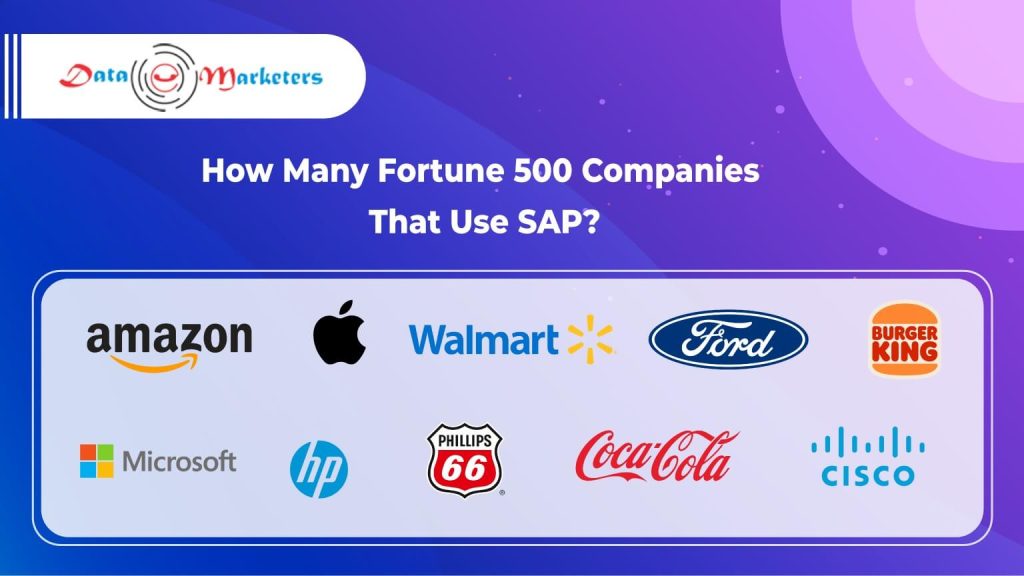
How Many Fortune 500 Companies Use SAP

How Many Fortune 500 Companies Use SAP?

How Many Fortune 500 Companies Use SAP

Systems Applications and Products in Data Processing aka SAP was founded in 1972 as a five-person business and has now grown to become a global technology leader with headquarters in Walldorf, Germany, and over 107,000 people. The corporation is also the world’s leader in ERP development, as well as AI and machine learning inventions. SAP is well-known for its industry-standard ERP solutions, as well as its numerous AI and machine learning advances.

The company serves more than 400,000 customers in 180 countries, with a robust portfolio of over 100 products adapted to diverse business activities.

Some of the most commonly used SAP products are: SAP S/4 HANA, which helps companies optimize data management and assists in running businesses smoothly. Many industries, such as manufacturing, retail, and finance, rely on it., SAP Success Factor is a cloud-based solution that handles HR duties like hiring, performance reviews, and staff training. It is extensively used in Education, Technology, and Healthcare fields., SAP Ariba is a supply chain management platform that helps businesses work with suppliers and procurement.

How Many Fortune 500 Companies Use SAP Worldwide

The popular enterprise software vendor, SAP serves several Fortune 500 organizations on the global platform. SAP solutions are used by over 89% of Fortune 500 companies within the US, 80% to 85% in Europe, 50% to 60% in Africa, and approx. 70% to 75% in APAC to automate business processes, boost efficiency, and foster innovation.
SAP offers integrated solutions for customers, human resources, supply chain, and finance. These solutions enabled Fortune 500 businesses to flourish in a competitive marketplace and react swiftly to consumer needs.

Here are some top Fortune 500 companies that use SAP worldwide:

  1. Amazon

Well-renowned global store known for its different variety of products and services. Amazon manages its supply networks and logistics through SAP IBP.

  • Walmart

International wholesale retail store sells a wide range of products at low prices. It manages its customer service and tracks inventory by using SAP ERP and SAP Customer Experience.

  • Ford

Ford is one of the best-recognized automobile companies in making autos like the Ford F-150 that have captured world markets. With this, it maintains and schedules a productive vendor network through using SAP S/4 HANA.

  • L’Oreal

It is a French globally renowned cosmetics and beauty brand that owns Lancome and Maybelline. To oversee the worldwide operation and HR Management they use SAP S/4 Hana and SAP Success Factor.

  • Volkswagen Group

An Automobile Business which has subsidiaries including Audi and Porche To manage their supply chain management and production processes they use SAP ERP and SAP Ariba.

  • Reliance Industries

Reliance Industries is a Top-Notch conglomerate company that uses SAP S/4 HANA to manage its financial and supply chain operations.

.

  • Toyota

One of the International Automotive sector leaders, it manages its procurements and finances on SAP S/4 HANA.

  • Shoprite

The biggest grocery shop in Africa at reasonably priced necessities at its location and more than 15 nations, they use the SAP Retail Solution to improve supply chain and stocks.

  • Coca-Cola

The beverage company is famous for its wide variety of soft drinks, the most well-known of which is Coca-Cola. They streamline their manufacturing process for their retail outlets by utilizing SAP S/4 HANA and Integrated Business planning.

  1. Burger King

The fast-food restaurant, Burger King, is known for its hamburgers, sandwiches, and more. They use SAP Business One for the management of restaurants and it brought in about 1.7 billion dollars in 2024.

 Top Companies Using SAP In The USA:

Company Name

Headquarter

Country

Revenue Size

Emp Size

Website

Amazon

Washington

United States

 604.3B

1,511,000

Apple

California

United States

385.6B

161,000

Walmart

Bentonville

United States

665 B

2,100,000

Ford

Michigan

United States

180.3 B

177,000


Microsoft

Washington

United States

245.1 B

228,000

Burger King

Florida

United States

24.4 B

361,185

Coco-Cola

Georgia

United States

46.5 B

79,100

HP

California

United States

53 B

58,000

Phillips 66

Texas

United States

148.8 B

14,000

Top Companies Using SAP In the Europe:

Company Name

Headquarter

Country

Revenue Size

Employee Size

Website

Siemens

Munich

Germany

$87.8 B

 321,000

L'Oreal

41 Rue Martre, Clichy

France


$41.2 B

94,605

IKEA

1Olof Palmestraa

Sweden

$44.9 B

 208,000

Nestlé

55 Avenue Nestlé

Switzerland

$107 B

269,852 

Volkswagen

Wolfsburg

Germany

€322.3 B

 654,359

Top Companies Using SAP In the Africa:

Company Name

Headquarter

Country

Revenue Size

Employee Size

Website

Shoprite

Cnr William Dabs

South Africa

$12.8 B

160,216

MNT Group

Johannesburg

South Africa

$12.5 B

 19,295

Safaricom

Nairobi 

South Africa

$2.7 B

 6,661

Dangote Group

Jakarta

South Africa

$1.4 B

19,561

Escom

Johannesburg

South Africa

$14.8 B

39,601

Top Companies Using SAP In the APAC:

Company Name

Headquarter

Country

Revenue Size

Employee Size

Website

Tata Steel

Bombay House 24 Homi Modi St, Fort, Maharashtra

India

$26.6 B

 75,263

Samsung

129 Samsung-ro Maetan-3dong, Suwon-s

South Korea

$211 B

 127,172

Telstra

242 Exhibition St, Melbourne, Victoria, 3000

Australia

$15.2 B

33,761

Infosys

Electronics City Hosur Rd, Wipro Limited

India

$18.8 B28

317,788

Alibaba Group

969 W Wen Yi Yuhang District Rd, Hangzhou

China

$133.6 B

 198,162

Why Do Top Companies Use SAP?

Global companies rely on SAP because it is the best fit for managing the operations and maximization of resources within any business. A comprehensive solution that supports the

effortless incorporation of business activities into its system, SAP ranks as one of the top Enterprise Resource Planning software providers around.

Here are some key reasons for top companies to use SAP:

1. Complete Integration: it provides complete integration of multiple business processes such as finance, HR, and delivery then combines them into one system. This will help in increasing in production rate while eradicating replication.

2. Accurate Analysis: Provides instant in-depth data analysis, by utilizing SAP’s advanced analytics to streamline businesses to make prominent decisions within seconds. This is highly in demand in today’s fast-paced marketplaces.

3. Offers Tailored solution: All companies, regardless of size, can use SAP. Because of its adaptability, businesses can also change and personalize its features to suit their needs.
4 Stick to Global Rules: It follows international standards strictly, and this feature makes it easier for global corporations to operate successfully
5. Advance Automation: Among other technical advancements, SAP uses machine learning, artificial intelligence, and the Internet of Things (IoT) to automate procedures, lowering errors and making space for innovation that increases output and productivity.

How to Effectively Connect with SAP Users and Expand Your Network?

SAP is a powerful tool, so many Fortune 500 organizations are using it. It is a popular target for enterprises trying to reach a wider audience. Reaching the target customer using SAP creates highly valuable opportunities for marketers, consulting firms, and IT service providers. These businesses, utilize services, integrations, and solutions to get maximum output, which is a perfect opportunity for your company to grow and gain steady ground as a trusted partner. Traditional methods can bring good results-such as combing through business directories, LinkedIn profiles, or corporate websites.  Nevertheless, these sometimes fall short of providing accurate and thorough contact details. It is not that effective for creating a network of SAP users because it takes lots of time and is irrelevant. To create a strong connection with SAP users, you can consider B2B database providers like Data Marketers Group

Conclusion:

By now, it’s clear how important SAP is, and we’ve observed its widespread use among Fortune 500 companies and its significant impact.

Given this, adopting SAP for your business processes may be a timely decision, as the software continues to release solutions to meet specific business needs. However, it’s crucial to first define your organizational goals to choose the right SAP product.

For marketers, having access to a database of Fortune 500 Companies that use SAP will be valuable for future efforts, as it can aid in promoting SAP-related services to these companies. With the software market growing, there will be numerous potential SAP customers.

FAQs

What Percentage of Fortune 500 Companies use SAP?

     Ans: According to a recent report, approx. 80% of Fortune 500 companies use SAP for their business performance.

Who are SAP’s Biggest Customers?

Ans: SAP’s biggest customers include Apple, Amazon, Walmart, Coca-Cola, Ford, Porche, and Burger King.

Which Country uses SAP the most?

Ans: The largest contributor to SAP is the United States. Around 45% of SAP ERP customers are from the US.

Which Industries use SAP?

Ans: SAP customers come from different industries ranging from small businesses to big multinational companies for instance- manufacturing, healthcare, retail, etc.

How Many Companies use SAP worldwide?

Ans: Around 450,000 companies globally use SAP to operate their businesses.

CRM Customers Email List

Step-by-Step Guide to Reaching CRM Customers Through Cold Email Campaigns

Introduction to Cold Email Campaigns

Understanding Your CRM Customers

Setting Clear Objectives for Your Campaign

Crafting the Perfect Email Subject Line

Personalizing Your Email Content

Structuring an Effective Email Body

Leveraging CRM Insights to Segment Your Audience

Timing and Frequency: When to Send Your Emails

Tools and Technologies to Automate Your Campaigns

A/B Testing and Measuring Success

Handling Responses and Managing Follow-Ups

Best Practices for Avoiding Spam Filters

Common Mistakes to Avoid in Cold Email Campaigns

Case Studies: Successful Cold Email Campaigns

Future Trends in Cold Email Marketing

Conclusion: Key Takeaways and Next Steps

Introduction to Cold Email Campaigns

A cold email campaign is an essential strategy used by businesses to reach out to potential customers who have had no prior interaction with the company. Effectively leveraging cold emails can significantly expand a business reach and drive engagement from untapped prospects. The primary goal of a cold email campaign is to establish a relationship, generate leads, or create brand awareness through unsolicited but relevant and personalized emails.

Cold email campaigns differ from spam in that they are well-researched, targeted, and designed to provide value to the recipient. Constructing an effective cold email campaign requires a keen understanding of the target audience and a well-crafted message that resonates with their needs.

Key Elements of Cold Email Campaigns

Target Audience Identification:

Define the ideal customer profile by considering demographic and psychographic data. Utilize CRM systems to segment potential leads based on specific criteria.

Personalization:

Employ dynamic content to address recipients by name and reference their company or industry. Highlight common challenges or goals to establish a connection.

Compelling Subject Line:

Craft concise and intriguing subject lines to capture attention. Avoid clickbait; ensure the subject line accurately reflects the email content.

Value Proposition:

Clearly articulate the value and benefits the recipient will gain. Position the message around solving a problem or fulfilling a need.

Call to Action (CTA):

Include a strong and clear CTA directing the recipient to the next step. Examples of CTAs include booking a demo, signing up for a webinar, or scheduling a call.

Follow-Up Strategy:

Implement a follow-up sequence to engage recipients who do not respond initially. Space follow-up emails appropriately to avoid overwhelming the prospect.

Best Practices for Cold Email Campaigns

Compliance: Ensure adherence to email marketing laws and best practices, including CAN-SPAM Act guidelines. Testing: Conduct A/B testing on different elements (subject lines, CTAs, content) to optimize performance. Monitoring: Track essential metrics such as open rates, response rates, and conversion rates to measure campaign success.

By adhering to these principles and focusing on customer-centric communication, businesses can successfully use cold email campaigns to reach CRM customers and foster meaningful interactions.

Understanding Your CRM Customers

To effectively reach CRM customers through cold email campaigns, it is paramount to understand who these customers are and what drives their behavior. A comprehensive understanding forms the foundation for crafting personalized and impactful email messages.

Segmentation

Segmenting CRM customers involves categorizing them based on specific criteria that are relevant to your business. Common segmentation parameters include:

Demographic Information:

Age Gender Occupation

Geographic Information:

Location Region

Behavioral Data:

Purchase history Website interaction

Psychographic Characteristics:

Interests Lifestyle Values

Data Analysis

Analyzing CRM data is critical for identifying trends and patterns in customer behavior. Utilize data analytics tools to:

Track customer engagement levels Monitor buying habits Identify peak purchasing times Evaluate customer loyalty and lifetime value

Customer Personas

Creating detailed customer personas helps in visualizing the target audience and tailoring email content more effectively. Key elements of customer personas include:

Personal Details:

Name Age Profession

Behavioral Insights:

Purchase motivations Pain points Preferred communication channels

Psychographics:

Hobbies Interests Values

Pain Points and Needs

Addressing the specific pain points and needs of CRM customers can significantly enhance email campaign performance. Identify and analyze:

Common Challenges:

Issues customers face within your industry

Desired Benefits:

Solutions customers seek Value propositions that resonate

Engagement Preferences

Understanding how your customers prefer to be engaged is vital for optimizing cold email strategies. This includes:

Preferred Communication Channels:

Email Social media Direct mail

Content Type Preferences:

Informational Promotional Educational

Timing and Frequency:

Best times to send emails Frequency that avoids email fatigue

Tools and Techniques

Employing the right tools and techniques ensures that CRM data is utilized effectively. Consider using:

CRM Software:

To manage customer relationships and interaction data

Automation Platforms:

For personalizing and scheduling email campaigns

Analytics Tools:

For measuring campaign success and customer engagement

By meticulously understanding CRM customers, businesses can tailor cold email campaigns that are more likely to capture attention, resonate with recipients, and drive action.

Setting Clear Objectives for Your Campaign

The foundation of any successful cold email campaign lies in setting clear, actionable objectives. Clear objectives provide direction, enhance focus, and ensure that each step leads closer to the predefined goals. To establish robust objectives for a cold email campaign targeting CRM customers, consider the following key elements:

Define the Target Audience:

Identify which segment of the CRM database the campaign will address. Analyze historical data to understand the preferences and behaviors of this group. Develop detailed customer personas to tailor content effectively.

Establish Measurable Goals:

Determine the desired outcomes, such as:

Increasing open rates by a certain percentage. Achieving a specific click-through rate (CTR). Generating a set number of quality leads.

Use SMART criteria (Specific, Measurable, Achievable, Relevant, Time-bound) to articulate these goals.

Clarify the Call-to-Action (CTA):

Plan the primary action you want recipients to take, whether it’s downloading a resource, scheduling a call, or signing up for a webinar. Align the CTA with the overall sales funnel and marketing strategy.

Set Timeframes and Milestones:

Outline the campaign duration with key milestones to track progress. Develop a timeline for content creation, email sends, and follow-up activities. Schedule regular reviews to assess performance and make necessary adjustments.

Budget and Resources Allocation:

Identify the budget needed for tools, content creation, and other resources. Allocate necessary resources, such as the team for content drafting, editing, and campaign management.

Compliance and Ethical Considerations:

Ensure the campaign adheres to email marketing regulations, such as GDPR or CAN-SPAM. Establish guidelines for maintaining the privacy and trust of CRM customers.

By setting clear and comprehensive objectives, a cold email campaign can operate with precise focus and efficacy, maximizing its impact on CRM customers and achieving the desired business outcomes.

Crafting the Perfect Email Subject Line

The email subject line is the first point of engagement with a potential CRM customer. Its effectiveness determines whether the email gets opened or sent straight to the trash. Here’s how to craft the perfect subject line:

Keep it Short and Sweet

Limit to 50 Characters: Aim for a concise subject line, ideally around 50 characters or fewer. Shorter subject lines are more likely to be read on mobile devices. Make Every Word Count: Use strong, impactful words that convey urgency, value, or curiosity.

Personalize Where Possible

Use the Recipient’s Name: Personalization can significantly increase open rates. Integrating the recipient’s name creates a sense of familiarity. Tailor to the Recipient’s Needs: Reference specific information relevant to the recipient. Mentioning a particular industry challenge or goal can make the subject line more intriguing.

Create a Sense of Urgency

Incorporate Time-Sensitive Language: Words like “urgent,” “limited-time,” “today only” can compel recipients to act quickly. Avoid Clickbait: It’s essential to balance urgency without misleading the recipient. Deceptive subject lines can harm credibility.

Be Clear and Specific

State the Value: What will the recipient gain by opening the email? Clearly outline the benefit or solution offered. Avoid Ambiguities: Vague subject lines can be skipped over. Specificity encourages engagement by setting clear expectations.

Include Actionable Language

Use Verbs: Action-oriented language encourages the reader to take immediate steps, such as “download,” “join,” or “explore.”

Test Different Approaches

A/B Testing: Continuously test different subject lines to identify what resonates best with the audience. This involves altering one element (e.g., urgency, personalization) while keeping other variables constant. Monitor Metrics: Keep track of open rates and other key performance indicators to gauge effectiveness.

Avoid Certain Pitfalls

Avoid Spam Triggers: Words like “free,” “discount,” or using all caps can trigger spam filters, reducing the chances of the email reaching the inbox. Keep It Professional: While creativity is encouraged, maintaining a professional tone ensures the brand’ authenticity and trustworthiness.

By following these guidelines, businesses can create compelling email subject lines that enhance the effectiveness of their cold email campaigns, ultimately leading to better engagement with CRM customers.

Personalizing Your Email Content

To maximize the impact of cold email campaigns, personalizing content is essential. Users respond more positively to emails that resonate with their specific needs and preferences. Effective customization can significantly boost engagement and conversion rates.

Segmentation: Start by segmenting the CRM audience. Group recipients based on demographics, purchase history, behavior, or any other relevant criteria. Segmentation ensures that each group receives content tailored to their unique characteristics.

Demographics: Gender, age, location Purchase History: Frequency, recency, monetary value Behavior: Browsing patterns, email engagement, social media activity

Dynamic Content: Utilize dynamic content to further personalize emails. Incorporate placeholders that automatically populate with the recipient’s information. This approach allows for a more customized experience without manual effort.

Example: “Hi [First Name], we noticed you recently [Action]. Here are some recommendations tailored just for you.”

Personalized Subject Lines: Crafting subject lines that include the recipient’s name or specific details can significantly increase open rates. Personalized subject lines appear more relevant and urgent, capturing the recipient’s attention immediately.

Behavioral Triggers: Implement behavioral triggers that send automated emails based on recipient actions. For instance, if a user abandons a shopping cart, trigger an email with a reminder and possibly an incentive to complete the purchase.

Content Relevance: Ensure the email content addresses the recipient’s pain points or interests. Product recommendations should reflect previous purchases or shown interest. Case studies, testimonials, and industry news relevant to the recipient can also be effective.

A/B Testing: Conduct A/B tests on different elements of the email to determine what resonates best with various segments. Test subject lines, body content, call to actions (CTAs), images, and offer types. Analyze the results to optimize future campaigns.

Feedback Loop: Use feedback from previous campaigns to refine personalization strategies. Monitor metrics such as open rates, click-through rates, and conversion rates. Collect qualitative feedback when possible to gain deeper insights into recipient preferences.

Responsive Design: Ensure the email design is responsive and accessible on all devices. Personalization can be ineffective if the content is not optimized for mobile viewing, given the high percentage of users who check emails on their phones.

By adhering to these personalization techniques, businesses can create compelling and relevant email content that enhances the user experience and drives results. Taking a methodical approach to personalization ensures that each email touches base with the recipient on a meaningful level, promoting better engagement and fostering stronger relationships.

Structuring an Effective Email Body

To engage CRM customers successfully, it is crucial to structure the email body effectively. Each component must be precise, relevant, and compelling to persuade the recipient to respond positively.

Opening Line: Begin with a personalized greeting. Use the recipient’s name to establish a connection. For example, “Dear [First Name],” or “Hi [First Name],”.

Introduction: Introduce yourself and the purpose of the email succinctly. Mention how the sender acquired the recipient’s contact information to build trust. For instance, “I am [Your Name], and I am reaching out after seeing your profile on [Source].”

Value Proposition: Clearly state the value the recipient will gain. Highlight the benefits and the unique selling points (USPs) concisely. For instance, “Our CRM tool can help you streamline your processes, saving you up to 20% more time.”

Body Content: Maintain an engaging and informative tone throughout. Break down critical points using bullet points or numbered lists for readability. Explain the features, benefits, and any relevant data or statistics that support your claims. Examples:

Feature 1: Enhanced user interface for better usability. Benefit 1: Increases user productivity by 15%. Data: “93% customer satisfaction rate.”

Social Proof: Include testimonials, case studies, or relevant endorsements to build credibility. A short, impactful testimonial example might be:

“Our productivity improved by 30% after implementing this CRM – [Company Name].”

Call to Action (CTA): The CTA should be clear and compelling. It should motivate the reader to take the desired action, such as scheduling a demo, signing up for a newsletter, or visiting a specific webpage. Use action-oriented language, e.g., “Schedule a free demo today!”

Closing: Ending the email politely yet firmly reinforces professionalism. Include any necessary contact information, and express willingness to provide further details. An example closing: “Looking forward to hearing from you. Best regards, [Your Name] [Contact Information]”.

Signature: A professional signature with your name, position, company, contact number, and social media links adds legitimacy and facilitates easier follow-up.

Incorporating these elements will maximize the email’s impact, ensuring that every part serves a purpose in guiding the recipient toward the intended action. Each component is vital to maintaining engagement and enhancing overall email effectiveness.

Leveraging CRM Insights to Segment Your Audience

Identifying and segmenting the audience makes cold email campaigns more effective. CRM systems house vital information that can be used to categorize contacts. Here are steps to leverage CRM insights for audience segmentation:

Understanding CRM Data

CRM systems store various types of data:

Demographic Data: Age, gender, job title, industry. Behavioral Data: Purchase history, website visits, email interactions. Engagement Data: Response rates, click-through rates, open rates.

Segmenting the Audience

Effective segmentation requires defining clear criteria. Utilize CRM data to create distinct segments:

Demographic Segmentation

Create segments based on job roles, industries, and company sizes.

Behavioral Segmentation

Identify segments by customer behavior such as purchase history or interaction with previous emails.

Engagement Segmentation

Segment by engagement levels—frequent responders versus non-responders.

Steps to Segmenting Your Audience

Collect and Clean Data

Ensure data is accurate and up-to-date. Remove duplicates and validate contact details.

Analyze and Identify Trends

Use CRM analytics to identify patterns and trends. Focus on significant data points relevant to the campaign goals.

Create Detailed Personas

Develop detailed buyer personas for each segment. Include pain points, goals, and typical behaviors.

Tailor Messaging

Customize email content to address the specific needs and preferences of each segment. Use personalized subject lines and offers for higher engagement.

Tools and Techniques

Utilize CRM features and third-party tools:

Segmentation Tools within CRM: Many CRM systems have built-in segmentation features. Advanced Analytics Tools: Use tools like Google Analytics to enhance segmentation efforts. Automation Tools: Employ tools that automate the process of data collection, analysis, and segmentation.

By effectively leveraging CRM insights, businesses can ensure that their cold email campaigns are highly targeted, personalized, and timely. The meticulous segmentation process plays a pivotal role in enhancing engagement rates and reaching desired outcomes.

Timing and Frequency: When to Send Your Emails

To maximize the effectiveness of cold email campaigns, businesses must meticulously consider timing and frequency. These factors significantly impact open rates and engagement levels.

Best Days to Send Emails

Tuesday

Industry data frequently suggests that Tuesday is optimal because recipients are catching up on work without the Monday overload.

Thursday

As the week progresses, Thursday stands out for user engagement, since it’s before the weekend distractions begin.

Wednesday

Midweek provides a balance, catching recipients when they are settled into their work routines.

Best Times to Send Emails

Early Morning (8-9 AM)

People often check emails first thing in the morning when arriving at work.

Late Morning (10-11 AM)

By late morning, recipients have likely cleared early tasks and are open to new emails.

Early Afternoon (1-3 PM)

After lunch, employees may browse their emails during a productive segment of their day.

Avoid Sending Emails

Monday Mornings

Employees tend to clear weekend buildup, leading to lower engagement.

Friday Afternoons

Recipients often prepare for the weekend or leave work early, reducing open rates.

Frequency of Emails

Initial Email:

Send an engaging, personalized introduction.

Follow-up Email:

Send the first follow-up after 3-5 days. A quick follow-up shows enthusiasm without seeming aggressive.

Subsequent Follow-ups:

Space these out by 7-10 days each. Persistence is key but avoid overwhelming the recipient.

Optimizing Send Times by Audience

B2B Audience:

Adapt to typical business hours for these recipients.

B2C Audience:

Evenings and weekends might provide better engagement as consumers may have more free time.

Tools and Analytics

Utilize CRM tools and email marketing platforms to analyze previous campaigns.

A/B Testing:

– Conduct A/B tests to assess which times and days resulted in higher open rates.

Performance Metrics:

– Track engagement metrics such as open rates, click-through rates, and response times to fine-tune future campaigns.

Adapting timing and frequency based on audience behavior and industry insights is essential for the success of a cold email campaign.

Tools and Technologies to Automate Your Campaigns

A robust suite of tools and technologies can significantly enhance the effectiveness of cold email campaigns. Implementing the right tools simplifies campaign management, optimizes deliverability, and increases engagement rates. Here are some essential categories and tools that can streamline your campaign:

Email Marketing Automation Platforms

Automation platforms are paramount for managing large-scale email campaigns. Key features include personalization, scheduling, and analytics.

Mailchimp SendinBlue HubSpot

Customer Relationship Management (CRM) Integration

Integrate your email campaigns with CRM systems to sync contact data and track interactions seamlessly.

Salesforce Zoho CRM Pipedrive

Email Verification Tools

To maintain a high sender reputation and improve deliverability, it’s crucial to clean your email list periodically.

ZeroBounce NeverBounce Hunter.io

Personalization and Dynamic Content

Personalizing emails can significantly improve open and response rates. Utilize tools that allow for dynamic content based on user behavior.

Personalize RightMessage Knak

Tracking and Analytics

Measure the success of your campaigns through opens, clicks, and conversions to refine your strategy continuously.

Google Analytics Mixpanel Litmus

A/B Testing Tools

Optimize subject lines, content, and calls to action by running A/B tests to determine what resonates best with your audience.

Optimizely VWO Mailchimp A/B Testing

Anti-Spam Compliance Tools

Ensure compliance with anti-spam laws like GDPR, CAN-SPAM, and CCPA by incorporating tools that manage consents and unsubscribe requests.

DataGrail OneTrust TrustArc

Workflow Automation

Simplify repetitive tasks like follow-ups and engagement tracking with workflow automation tools.

Zapier Integromat Automate.io

Template and Design Tools

Save time and enhance campaign visuals with ready-made templates and design tools that offer drag-and-drop functionality.

Stripo BEE Free Canva

By leveraging these tools and technologies, campaign managers have a greater opportunity to not only reach but genuinely engage CRM customers, thereby optimizing overall results and return on investment.

A/B Testing and Measuring Success

A/B testing, also known as split testing, is an essential technique for improving cold email campaigns aimed at reaching CRM customers. By comparing two versions of an email to determine which one performs better, marketers can optimize their messaging and design for maximum impact. Here’s a detailed process on how to execute A/B testing and measure success effectively.

Setting Up A/B Tests

Identify Goals: Determine what you want to achieve with your cold email campaign. Common goals include increasing open rates, click-through rates, and conversions. Select Variables to Test: Choose elements within your email to test. These could include subject lines, email copy, call-to-action buttons, images, or sending times. Create Variations: Develop two or more versions of the email with slight differences based on the selected variables. Ensure changes are limited to one variable per test to isolate its impact. Segment Your Audience: Divide your target list into equally sized segments. Ensure each segment is similar in characteristics to avoid skewing results.

Running the A/B Test

Distribute Emails: Send out the different versions of your email to the segmented audience simultaneously to control for time-based factors. Monitor Performance: Use CRM analytics tools to track email performance. Key metrics to watch include open rates, click-through rates, and conversion rates. Collect Data: Gather quantitative data on how each version performed. This will provide insights into which version resonated more with the audience.

Analyzing Results

Compare Metrics: Evaluate the collected data to compare the performance of different email versions. Focus on the key metrics identified at the goal-setting stage. Determine Statistical Significance: Ensure that the results are statistically significant by using tools or formulas that calculate the probability that your results are due to chance. Draw Conclusions: Decide which email version was more effective in achieving the set goals. Use these findings to inform future email campaigns.

Iterating and Refining

Implement Winning Elements: Integrate the successful elements from the A/B test into your standard email templates. Continued Testing: A/B testing should be an ongoing process. Regularly test new variables to continually optimize and fine-tune your email campaigns. Feedback Loop: Collect feedback from CRM customers to gain qualitative insights, complementing quantitative data, thus providing a holistic view of email performance.

Employing A/B testing will not only enhance immediate campaign effectiveness but also contribute to long-term improvements in customer engagement and conversion rates. Marketers should view it as an integral part of their email marketing strategy.

Handling Responses and Managing Follow-Ups

Handling responses and managing follow-ups in cold email campaigns involves several strategic actions to ensure maximum engagement and conversion rates.

Response Management

Categorize Responses:

Positive replies: Interested in the product/service, schedule calls or meetings. Neutral replies: Requests for more information or clarification. Negative replies: Not interested or opting out.

Prompt Responses:

Respond within 24 hours to keep prospects engaged. Personalize responses to show attentiveness and understanding of their needs.

Use of CRM:

Track all communications within the CRM system. Tag and note specific information about the respondent’s needs and status.

Follow-Up Strategy

Segment Follow-Ups:

Prioritize based on the level of interest indicated. Use tailored messaging for each segment based on prior interactions.

Timing and Frequency:

Schedule follow-ups at critical intervals, such as 3 days, 7 days, and 14 days. Avoid overwhelming prospects with too frequent emails.

Content of Follow-Ups:

Provide value by including additional resources, case studies, or testimonials. Address any previous questions or concerns they had.

Automation and Personal Touch

Automated Follow-Ups:

Utilize CRM tools for setting automated follow-up emails. Ensure automation does not compromise personalization.

Personalized Outreach:

Reference previous interactions to keep continuity and relevance. Use the recipient’s name and mention specific interests or queries addressed.

Monitoring and Adjusting

Analytics Review:

Track open rates, response rates, and conversion rates. Identify which follow-up tactics yield the best results.

Feedback Loop:

Regularly solicit feedback and adapt the strategy based on responses. Continuously improve the approach by learning from successful and unsuccessful engagements.

CRM Update:

Keep the CRM updated with all interactions. Ensure no follow-ups are missed due to lack of information.

A systematic approach to managing responses and follow-ups can greatly enhance the efficacy of cold email campaigns. Utilize the data and insights from each interaction to refine strategies continuously.

Best Practices for Avoiding Spam Filters

To ensure that cold emails reach the intended CRM customers, adhering to industry best practices is essential.

1. Use a Reputable Email Service Provider

Selecting a reputable email service provider (ESP) is crucial. Reputable ESPs have established relationships with internet service providers (ISPs) and maintain high deliverability rates.

2. Verify Email Lists

Always use clean and verified email lists. Regularly update and clean the lists to remove invalid or non-engaging email addresses.

3. Craft a Clear Subject Line

A clear and precise subject line helps improve open rates. Avoid using all caps, excessive exclamation marks, or spammy words like “free,” “guarantee,” and “urgent.”

4. Personalize Emails

Personalization increases engagement. Address the recipient by name and tailor content to their specific interests or behaviors.

5. Avoid Attachments and Excessive Links

Attachments can trigger spam filters. Instead, include links to a landing page or website. Limit the number of links to 1-2 per email.

6. Maintain a Good Text-to-Image Ratio

Emails comprised entirely of images may be flagged as spam. Maintain a balanced text-to-image ratio, ideally 60% text and 40% images.

7. Implement Authentication Protocols

Authenticate the sending domain with protocols like SPF, DKIM, and DMARC. These protocols verify the sender’s identity and help avoid being flagged as spam.

8. Include an Unsubscribe Link

An unsubscribe link is not only a legal requirement but also a good practice. It ensures recipients who no longer wish to receive emails can easily opt-out.

9. Test Emails Before Sending

Use spam-checking tools to test emails before sending. These tools analyze the email content and suggest improvements to avoid spam filters.

10. Monitor Sender Reputation

Regularly check the sender’s reputation score. High bounce rates, complaints, or sending to spam traps can negatively impact reputation. Tools like Sender Score can provide valuable insights.

11. Engage Regularly but Don’t Overwhelm

Sending too many emails can lead to high unsubscribe rates and complaints. Find a balance to maintain engagement without overwhelming the recipients.

12. Provide Value

Ensure each email offers valuable content to the recipient. Whether it’s informative, educational, or promotional, the email should provide something of interest.

Consistency in following these best practices will help maximize deliverability and ensure cold emails reach CRM customers effectively.

Common Mistakes to Avoid in Cold Email Campaigns

Embarking on a cold email campaign requires precision and attention to detail. Avoiding common mistakes can significantly improve engagement and conversion rates.

Lack of Personalization: Failing to customize emails can make them appear generic and unimportant. Personalizing emails by using the recipient’s name and referencing their specific needs can make a significant difference.

Weak Subject Lines: The subject line is the first thing a recipient sees. Weak or misleading subject lines can lead to low open rates. Crafting compelling, relevant subject lines is crucial for grabbing attention.

Overlooking the Target Audience: Not understanding the target audience leads to irrelevant content. Segmentation and analysis are essential for ensuring that the email resonates with the recipient’s interests and pain points.

Unclear Call to Action (CTA): Emails without a clear CTA can confuse recipients. It is critical to include a CTA that is direct and easy to understand, guiding the recipient on what to do next.

Sending at the Wrong Time: Timing can significantly impact open rates. Sending emails when recipients are unlikely to check their inbox can result in low engagement. Analyzing the optimal times for sending emails to the target audience is vital.

Ignoring Mobile Optimization: Many people check emails on mobile devices. Emails that are not optimized for mobile can lead to a poor user experience. Ensuring that the email format is mobile-friendly is essential.

Overloading with Information: Including too much information can overwhelm the recipient. Emails should be concise and to the point, providing just enough information to spark interest and prompt further action.

Failing to Follow Up: One email is often not enough. Without a follow-up strategy, potential opportunities may be lost. Automated follow-up sequences can help in maintaining engagement.

Neglecting Compliance with Laws: Ignoring CAN-SPAM Act and GDPR requirements can lead to legal issues. Ensuring that all emails comply with legal standards is mandatory.

Lack of A/B Testing: Not testing different elements of the email can result in subpar performance. A/B testing subject lines, CTAs, and email content can provide insights into what works best.

Avoiding these common mistakes can enhance the effectiveness of cold email campaigns, leading to higher engagement and better conversion rates.

Case Studies: Successful Cold Email Campaigns

Case Study 1: SaaS Solution Provider

A leading SaaS solution provider aimed to increase their client base by targeting mid-sized enterprises. They employed a highly personalized approach in their cold email campaign.

Objective: Increase enterprise client acquisition. Strategy:

Segmentation: Created detailed segments based on company size and industry. Personalization: Used the company’s CRM data to personalize each email with recipient-specific information. Subject Lines: Crafted compelling subject lines highlighting specific pain points. Follow-ups: Deployed a systematic follow-up sequence to re-engage non-responsive leads.

Results:

Open Rate: 35% Response Rate: 15% Conversion Rate: 8%

Case Study 2: E-commerce Platform

An emerging e-commerce platform focused on fashion and accessories aimed at increasing vendor sign-ups through a targeted cold email campaign.

Objective: Boost vendor registrations on the platform. Strategy:

Data Enrichment: Leveraged in-depth market research to identify potential vendors. Content: Highlighted the platform’s unique features and success stories of current vendors. Timing: Sent emails during peak business hours to maximize open rates. A/B Testing: Tested different email formats and messaging to optimize performance.

Results:

Open Rate: 42% Response Rate: 18% Conversion Rate: 10%

Case Study 3: B2B Hardware Supplier

A well-established B2B hardware supplier sought to broaden their customer base to include more international clients through a cold email initiative.

Objective: Expand international customer base. Strategy:

Localization: Localized email content to cater to different regional markets. Trust Building: Incorporated client testimonials and case studies relevant to each region. Call to Action: Clearly defined actions to book a demo or request a catalog. Analytics: Continuously monitored analytics to adjust and improve campaign assets.

Results:

Open Rate: 40% Response Rate: 20% Conversion Rate: 12%

Lessons Learned

Segmentation and Personalization: Essential for higher engagement and conversion rates.

Compelling Subject Lines: Drives higher open rates.

Consistent Follow-ups: Critical for re-engaging potential leads.

Data-Driven Adjustments: Monitoring and adaptation based on analytics are crucial for optimal performance.

Future Trends in Cold Email Marketing

The landscape of cold email marketing continues to evolve, driven by advancements in technology and changing consumer behavior. To stay competitive, businesses must keep a pulse on emerging trends.

AI and Automation

Personalization at Scale: Artificial Intelligence (AI) enables businesses to create highly personalized emails without manual effort. AI algorithms analyze CRM data to segment audiences and tailor messages. Automated Follow-Ups: Automation tools can schedule follow-up emails based on user behavior, increasing engagement and conversion rates. Predictive Analytics: Predictive algorithms allow marketers to anticipate customer responses and optimize email content and timing.

Interactive Content

Embedded Surveys and Polls: Incorporating surveys directly into emails can increase interactivity and provide immediate feedback. Dynamic Product Recommendations: Using CRM data, businesses can include live updates of product recommendations that change based on user interactions. Gamification: Adding game-like elements, such as quizzes or challenges, can boost user engagement and retention.

Changes in Privacy Regulations

GDPR and CCPA Compliance: Stricter data protection laws require businesses to prioritize data privacy. Compliance involves obtaining explicit consent and providing clear opt-out options. Transparency and Trust: Transparency in data usage builds trust. Customers are more likely to engage with businesses that are open about how their information is used.

Advanced Segmentation

Behavioral Targeting: Analyzing customer behaviors to create specific, targeted email campaigns. Lifecycle Stages: Tailoring email strategies to the different stages of the customer lifecycle, from onboarding to re-engagement. Micro-Segmentation: Creating hyper-specific audience segments for more precise targeting and improved relevance.

Enhanced Analytics

Real-Time Metrics: Real-time tracking and reporting enable immediate adjustments to email campaigns, optimizing performance. Advanced KPIs: Beyond open and click-through rates, businesses are focusing on metrics like customer lifetime value (CLV) and return on investment (ROI) from email campaigns. A/B Testing: Advanced A/B testing methods are being used to refine every element of cold email campaigns, from subject lines to call-to-action buttons.

Integration with Omnichannel Strategies

Unified Customer Experience: Integrating cold email campaigns with other channels (social, SMS) for a seamless customer experience. Cross-Channel Data Sharing: Leveraging CRM systems that integrate data from multiple channels to inform email strategies.

As these trends continue to develop, businesses in cold email marketing must remain agile, adopting new tools and strategies to enhance their campaigns’ effectiveness.

Conclusion: Key Takeaways and Next Steps

A well-executed cold email campaign can be a valuable strategy for reaching CRM customers effectively. Here are the key takeaways and recommended next steps to optimize such campaigns:

Key Takeaways

Targeted Contact List:

Ensure the contact list is current and targeted. Implement segmentation to tailor messages to specific audience groups.

Personalization:

Customize emails based on customer data. Use the recipient’s name and reference relevant information.

Compelling Subject Lines:

Craft intriguing and concise subject lines. Avoid spammy words to improve open rates.

Value Proposition:

Clearly articulate what benefits the recipient will get. Align the value proposition with the recipient’s needs.

Clear Call-to-Actions (CTAs):

Use specific and actionable CTAs. Ensure CTAs are easily identifiable and compelling.

Follow-Up Strategy:

Develop a structured follow-up process. Be consistent but respect boundaries, avoiding overcommunication.

A/B Testing:

Conduct A/B testing on various elements such as subject lines and email content. Use insights from the tests to refine future campaigns.

Compliance:

Adhere to regulations such as CAN-SPAM and GDPR. Include unsubscribe options and respect customer preferences.

Next Steps

Audit Current Contact List:

Review and clean the CRM contact list. Segment based on demographics, behaviors, and past interactions.

Develop Email Templates:

Create versatile templates for different segments and purposes. Implement personalization tokens.

Set Up Tracking & Analytics:

Utilize tools to monitor email open rates, click-through rates, and conversions. Analyze performance reports to identify improvement areas.

Implement Automation:

Use CRM and email marketing tools to automate follow-ups. Streamline processes to ensure timely communication.

Gather Feedback:

Collect feedback from recipients to gauge email effectiveness. Adjust strategies based on feedback and performance data.

By adhering to these key principles and strategically planning the next steps, an organization can significantly enhance their cold email campaigns’ effectiveness, ultimately fostering better engagement and conversion rates among CRM customers.